A Very Short, Very Opinionated History of Pasta
From Etruscan tombs to TikTok carbonaras — how a paste of flour and water hijacked the world.
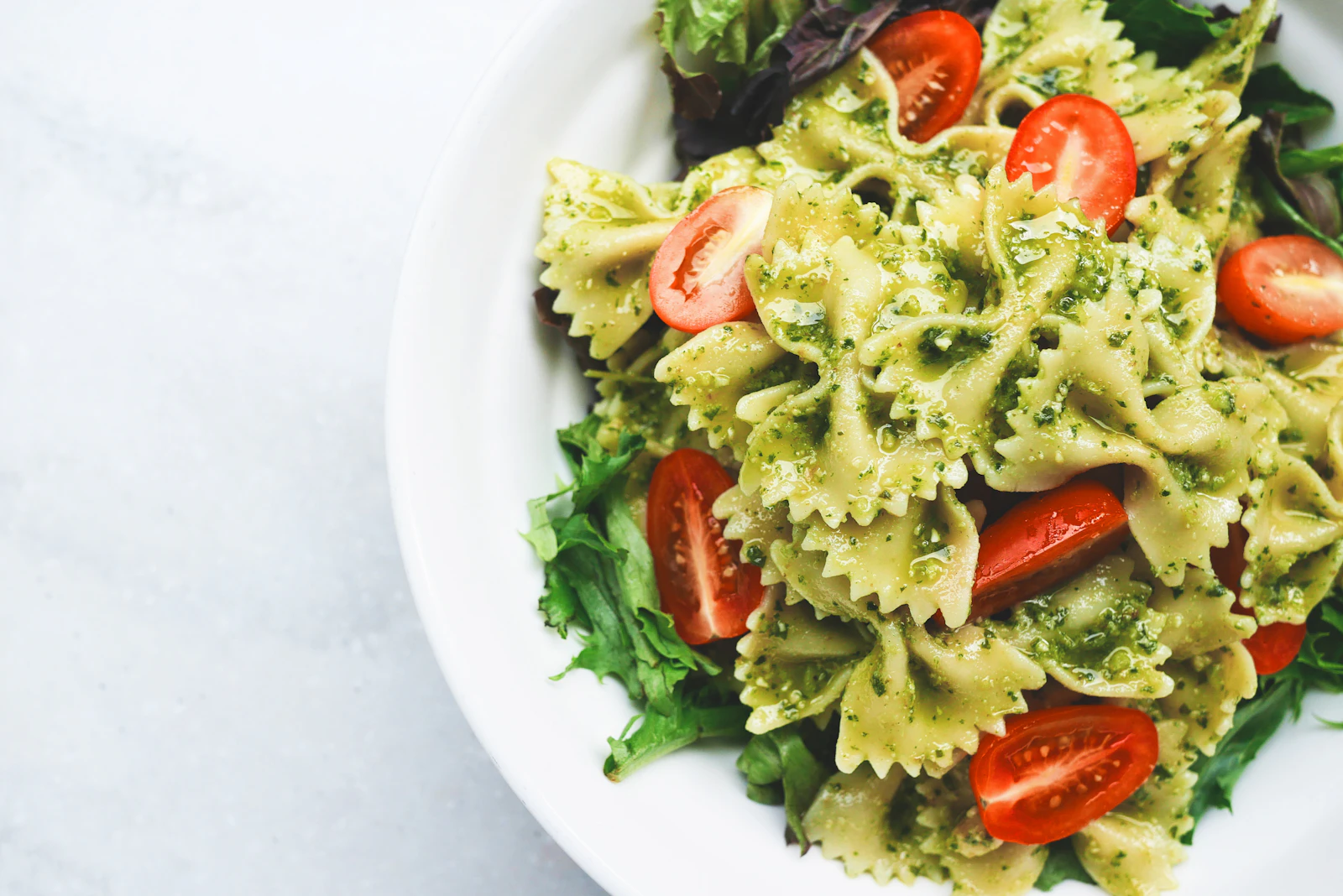
Pasta is a lie we tell ourselves beautifully. We say it is ancient, peasant, and unchanging — a noble simplicity passed from nonna to nonna in unbroken candlelight. The truth is messier, funnier, and far more interesting. Pasta is a 4,000-year-old immigrant, a culinary opportunist that has crossed deserts and oceans, taken the names of saints and dictators, and quietly become the most democratic food on earth. Tonight, somewhere, a billionaire is twirling the same shape as a student eating from a chipped bowl. That is not a small thing.
Before Italy, there was paste
The earliest credible noodle on record is not Italian. In 2005, archaeologists at Lajia, in northwest China, lifted an overturned earthen bowl and found beneath it a tangle of thin yellow strands roughly four thousand years old, made from two kinds of millet. They were noodles. They had survived an earthquake, a flood, and four millennia of skepticism. They had not survived in time to be eaten.
This does not mean the Chinese 'invented' pasta and Marco Polo smuggled it home in his sleeve, as the old story goes. Marco Polo returned to Venice in 1295. Italians had already been eating something called maccheroni for at least a century by then. What Lajia tells us is older and stranger: that almost every agricultural civilization, given grain and water and a flat rock, eventually arrives at the noodle. It is a human inevitability, like fermenting fruit or naming the moon.
The Etruscans, the Arabs, and a Sicilian named Idrisi
Inside an Etruscan tomb at Cerveteri, north of Rome, carved reliefs from the 4th century BCE show a rolling pin, a flour board, a pasta wheel, and a knife. The Etruscans, predecessors to the Romans, were almost certainly making sheet pasta — something like lasagne — before Caesar was a glint in anyone's eye. The Romans inherited it, called it laganum, and slid it into bowls of broth.
But the pasta we recognize today — dried, durable, traded across borders — owes its existence not to Rome but to the Arab world. When the Arabs conquered Sicily in the 9th century, they brought irrigation, citrus, sugar, and a technology far more important to our story: the practice of drying ribbons of dough into hard, shelf-stable threads called itriyya. Around 1154, the geographer Muhammad al-Idrisi, working for the Norman king Roger II in Palermo, wrote that in the town of Trabia they were producing 'foods of flour in the form of strings' and shipping them by the boatload to Calabria, to other Muslim and Christian lands. This is the first unambiguous written record of pasta as an industry. Sicily, not China, is where pasta became commerce.
The tomato was missing for most of pasta's life
Here is the joke history plays on us. For roughly 80% of pasta's existence in Europe, there was no tomato sauce. The tomato, a South American newcomer, arrived in Spain in the 1500s and was treated like a poisonous ornamental for two centuries. The first written recipe pairing pasta with tomato shows up in 1790, in a Neapolitan cookbook by Vincenzo Corrado. That is shockingly recent. The Sistine Chapel ceiling is older than pasta al pomodoro.
Before tomatoes, pasta was eaten with cheese, butter, sugar, cinnamon, raisins, even sweet almond milk — and most often, simply, with broth and grated hard cheese. The medieval Italian palate was closer to a Moroccan tagine than to anything you would order at a red-checkered tablecloth. The tomato came late, conquered fast, and then convinced us it had always been there. That, friends, is good marketing.
The shape revolution
By the 1600s, Naples was pasta's spiritual capital. The climate — warm sea air, hot inland winds — was perfect for drying long strands on bamboo racks in the open street. Travelers wrote home, half-disgusted and half-fascinated, about the maccheronari: street vendors who sold steaming bowls of pasta to the working poor, who ate it with their hands, throwing their heads back like sword-swallowers. The Bourbon nobility found this so distasteful that the introduction of the four-tined fork, which finally allowed pasta to be twirled with dignity, is sometimes credited to King Ferdinand IV's chamberlain. Pasta, in other words, civilized the fork — not the other way around.
Industrial extrusion machines arrived in the 19th century, and Italy promptly went berserk. Today there are more than 350 documented shapes — orecchiette ('little ears') from Puglia, trofie ('twists') from Liguria, gigli ('lilies') from Tuscany, strozzapreti ('priest stranglers') from Emilia-Romagna, the names alone a small folk anthology. Each shape exists because a specific sauce demanded it. Ridged tubes grab meat. Hollow tubes drink broth. Twists trap pesto. Flat ribbons cradle cream. The shape is not decoration; it is engineering. Mismatching them is not a crime, exactly, but it is a small unkindness to dinner.
How pasta became Italian
Until 1861, there was no Italy — only a patchwork of kingdoms, duchies, and Bourbon outposts, each with its own grain, its own dialect, its own bread. Pasta unified the new nation almost by accident. The wheat-rich south already lived on it; the rice and polenta north did not. But as poor southerners moved north for factory work, they took their pots with them. By the early 20th century, pasta was being eaten from Palermo to Turin, and Italy had quietly invented its first national dish without anyone holding a vote.
Then came the emigrants. Between 1880 and 1920, four million Italians sailed for the Americas, and they took two things in their suitcases: their saints, and their pasta. In Buenos Aires, in Brooklyn, in São Paulo, they re-invented the dishes of home using whatever was cheap and abundant — beef instead of guanciale, canned tomato instead of San Marzano, more meat than any contadino had ever dreamed of. The dish you call 'spaghetti and meatballs' is not an Italian invention; it is a Sicilian-American invention, the edible memoir of homesickness with a raise.
Why a billion of us still cook it
Pasta endures because it is, by almost any measure, the most efficient food humans have ever assembled. It is cheap. It stores for years. It cooks in ten minutes. It accepts almost any sauce, any vegetable, any leftover. A pound feeds four. A bowl forgives the cook. It is, structurally, the opposite of cuisine as performance. It is cuisine as kindness.
And it is, secretly, a vehicle for community. You do not invite people over for a sandwich. You invite them over for pasta. You make too much, you serve it from the pot, you keep talking. Somewhere in the four-thousand-year journey from a millet noodle under a Lajia bowl to your kitchen tonight, pasta picked up a job description: it became the food we eat with the people we love. Everything else is technique.
"Tell me what you put on your pasta, and I will tell you who you are."
So the next time someone insists that the 'authentic' way to eat carbonara is the only way, smile gently. Authenticity, in pasta, is a moving target — a story Italy keeps re-writing. The only real rule is the one written under that overturned bowl in Lajia, four thousand years ago: grain, water, fire, and someone hungry waiting at the table. Everything since is just shape and sauce.