The Italian Pantry: Twelve Things You Should Always Have
A no-nonsense guide to the ingredients that turn a weeknight into a proper Italian dinner.

The fastest way to upgrade your home cooking is not to learn a new recipe. It is to upgrade your pantry. Italians eat well on Tuesday nights not because they are better cooks (most aren't), but because the boring shelves above the stove are stocked with ingredients that do most of the work before they even pick up a knife. What follows is the list — twelve items, no fluff — that turns a tired evening and ten minutes into a real dinner. If you keep these on hand, you will never again find yourself ordering pizza out of despair.
1. Good extra-virgin olive oil (two bottles)
Keep two. A workhorse bottle for cooking — something Italian, single-origin if you can, around 8–12 euros a liter, used for sautéing and finishing weeknight pasta. And a special bottle, peppery and grassy and slightly more expensive, used only raw: drizzled on soup, on burrata, on the final plate. The second bottle is the one that transforms a meal. Never cook with it. Never let anyone else use it. Hide it if you must.
2. San Marzano tomatoes
Whole, peeled, packed in juice, in a tin from southern Italy. Real San Marzanos come from the volcanic plain south of Naples and carry a DOP seal. They are sweeter, less acidic, and more tender than ordinary canned tomatoes. Crush them by hand into a hot pan with garlic and olive oil, simmer fifteen minutes, season with salt, and you have made a marinara that beats 90% of restaurant versions. Avoid 'tomato sauce' in tins — that is already-cooked, already-seasoned glop. You want raw tomatoes in tin only.
3. Parmigiano Reggiano, in a wedge
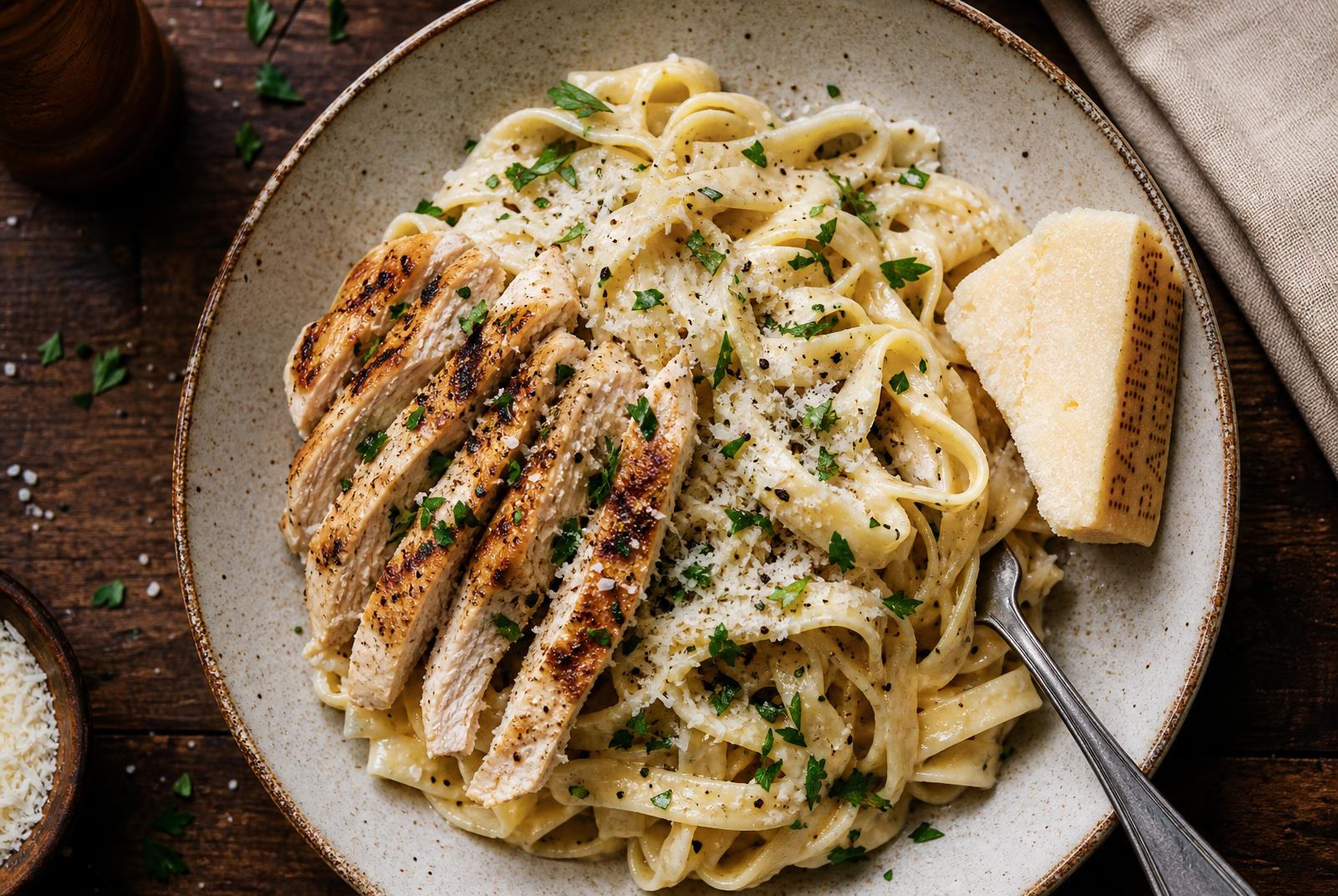
Never pre-grated, never in a green can. Buy a wedge from a wedge-cutting shop, at least 24 months aged. Keep it wrapped in waxed paper inside a plastic bag in the fridge, where it will last weeks. Grate as needed. The smell, when you first unwrap it, should remind you of pineapple and old wood. If it smells of plastic, take it back.
4. Pecorino Romano
Parmigiano's saltier, sheepier southern cousin. Essential for any Roman pasta — carbonara, cacio e pepe, gricia, amatriciana. Sharper, funkier, and more aggressive than parm. Most home cooks own only parm; getting a wedge of pecorino is the single easiest upgrade to your repertoire.
5. Garlic — fresh heads, never pre-peeled
Pre-peeled garlic in a jar is a war crime. Buy heads with tight, papery skin and a faint pinkish blush. Store in a dark drawer, not the fridge. Slice it thin, smash it with a knife, or grate it — never put it through a press, which crushes it into bitter paste. And for the love of everything, learn to remove the green germ in the center of older cloves; it is the source of garlic's harsh aftertaste and its tendency to repeat on you.
6. Anchovies in oil
The most misunderstood ingredient in Western cooking. Anchovies do not make a dish taste fishy. They dissolve into hot oil and disappear, leaving behind a deep, savory, glutamate-rich foundation — what the Japanese call umami. Half a tin, melted into garlic and olive oil, is the secret behind half the great pasta sauces in Italy: puttanesca, alla Norma, broccoli e acciughe. Italian or Spanish brands packed in oil, please. Salt-packed are better but require rinsing.
7. Capers in salt
Salt-packed capers from Pantelleria or the Aeolian islands are infinitely better than the puny brined ones from a jar. Rinse them, soak them ten minutes, and they will explode with flavor — briny, floral, vegetal, sharp. They keep for a year in a sealed container in the cupboard. They go on fish, in puttanesca, on tomato salads, into chicken piccata, and anywhere a dish needs a sour pop.
8. Dried pasta, two or three shapes
You need a long shape (spaghetti or linguine), a short ridged shape (rigatoni or penne rigate), and a little soup pasta (ditalini, orzo, or stelline) for brothy nights. Buy bronze-die extruded pasta — the label will say 'trafilata al bronzo.' Bronze dies leave a slightly rough, porous surface on the pasta that grabs sauce like Velcro. Teflon-die pasta is slick and refuses to be dressed properly. The price difference is a euro a kilo. Pay it.
9. Dried chile flakes (peperoncino)
Calabrian chile is best if you can find it; standard red pepper flakes work. A pinch in hot oil before the garlic, and the whole pasta sauce wakes up. Italians use it lightly — for warmth, not for heat. A jar lasts a year, but replace it then; old chile is dust.
10. Lemons (always)
Not technically pantry, but always on the counter. The grated zest of a lemon, added at the end to almost anything — pasta, salad, fish, roast chicken — does what nothing else can: it lifts. It clarifies. It tells the dish to wake up. Buy unwaxed if possible, and always zest before juicing.
11. Flaky sea salt and fine sea salt
Two salts. Fine sea salt for the pasta water and seasoning during cooking. Flaky sea salt — Maldon, or Italian sale di Cervia — for the final crunch on focaccia, on tomatoes, on grilled vegetables. Iodized table salt is for chemistry experiments, not food. Throw it out.
12. A bottle of dry white wine, opened
Italian cooks deglaze with wine constantly. A glass of dry white — Verdicchio, Vermentino, Pinot Grigio — opened on the counter for the night's cooking. What goes into the pan is a tablespoon or two; what goes into you is the rest. This is, structurally, the central genius of Italian cooking. The cook is also the audience. The pan and the glass are both happy. Dinner becomes a small celebration, not a chore.
Put it all together
With these twelve things in your kitchen, you can make twenty different dinners without going shopping. Spaghetti aglio e olio (garlic, oil, chile, parsley) in eight minutes. Pasta al pomodoro in fifteen. Puttanesca in twenty. Pasta with anchovies and breadcrumbs in twelve. Cacio e pepe with the pecorino. Aglio, olio, lemon zest, and chile for a Sunday-night reset. None of these dishes need a recipe once you have made them twice. They are not feats. They are reflexes.
That is the real lesson of Italian cooking. It is not, in the end, about ingredients or technique. It is about reflex — the ability to walk into a kitchen tired, open one cupboard and one fridge, and put something honest on the table in less time than it takes to scroll through a delivery app. Once your pantry is right, you are halfway there. The other half is just turning the burner on.